2026 Best Wafer Roll Machine What to Look For?
Choosing the right Wafer Roll Machine can significantly impact your production quality and efficiency. In 2026, various options flood the market. Each machine has unique features, making selection critical. Manufacturers offer machines with different capacities and technologies. This diversity can overwhelm buyers.
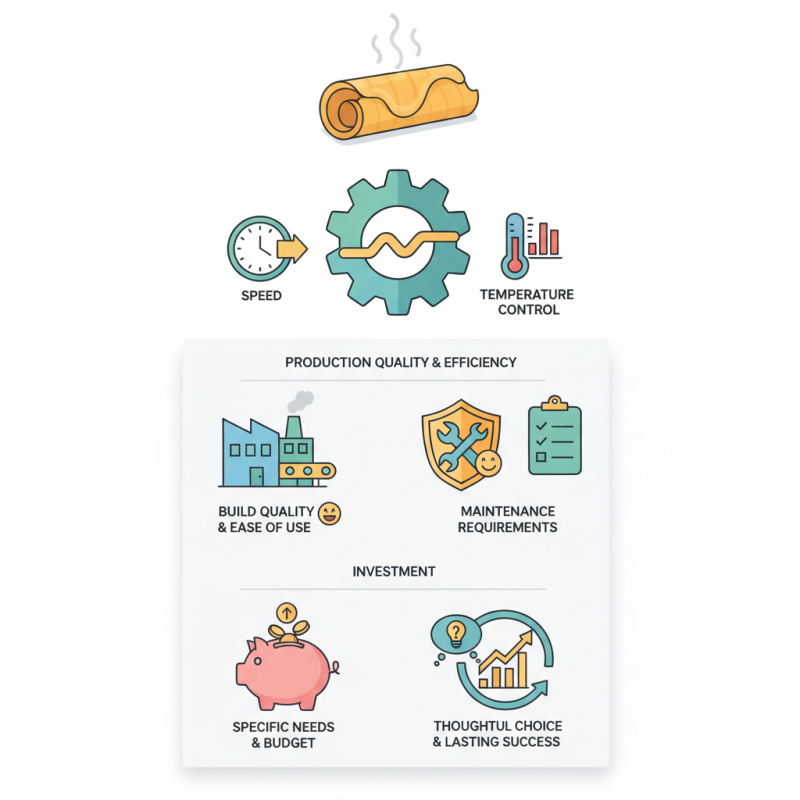
When looking for a Wafer Roll Machine, consider production speed and temperature control. These factors directly affect the final product's texture and flavor. It’s essential to evaluate the machine’s build quality and ease of use. Some machines might appear impressive but underperform in real-world applications. Additionally, maintenance requirements should not be overlooked.
Investing in a Wafer Roll Machine is crucial for any business. A poor choice could lead to costly operational issues. Reflect on your specific needs and budget before diving into options. Mistakes in this decision could hinder production. Aim for a thoughtful, well-informed choice to ensure lasting success.
Understanding Wafer Roll Machines: Key Features to Consider
When choosing a wafer roll machine, understanding key features is crucial. Production speed is a primary factor. Machines that operate at speeds of 30-60 rolls per minute are often preferred. Higher speed can significantly boost productivity, but it may compromise quality if not managed properly. A balance between speed and quality is essential.
The machine's design and build also matter. Stainless steel components ensure durability and hygiene. Additionally, look for machines with easy maintenance features. A well-designed machine should have accessible parts for quick cleaning and repairs. Research by industry analysts shows that maintenance issues can lead to downtime. Downtime can cost manufacturers thousands in lost revenue.
Another important factor is automation. Many modern machines offer automated processes. This includes features like automatic feeding and cutting. Automated machines help reduce labor costs but may require initial investment. New reports indicate that the market for automated food processing equipment is projected to grow by 10% annually. However, smaller businesses must weigh this cost against their budget. Not every operation needs the latest model.
Types of Wafer Roll Machines and Their Applications
Wafer roll machines come in various types, each designed for specific applications. The most common types include manual, semi-automatic, and fully automatic machines. Manual machines require hands-on operation, allowing greater control over the wafer-making process. This can be beneficial for small-scale production or artisanal creations. However, it can also lead to inconsistencies if not operated with precision.
Semi-automatic machines strike a balance between control and efficiency. They often require an operator to manage certain steps but automate others. This can enhance production speed while still allowing for some craftsmanship. Fully automatic machines, in contrast, are designed for high-volume production. They can produce large batches quickly, but they may lack the personal touch that some consumers appreciate.
Choosing the right type of machine depends on production needs and the desired quality. A higher-speed machine might produce more wafers, but at what cost to flavor and texture? Perhaps investing in a manual or semi-automatic option, despite lower output, may yield a superior product that stands out in quality. Reflecting on production goals will guide the decision significantly.
Essential Technical Specifications for Optimal Performance
When selecting a wafer roll machine, technical specifications are crucial for optimal performance. Key aspects include production capacity, power consumption, and dimensions. According to industry reports, machines that produce over 2000 pieces per hour are becoming standard. This is essential for high-demand businesses. However, machines exceeding this capacity can lead to higher energy costs.
Another vital specification is the design of the rolling mechanism. A well-designed roller can dramatically enhance texture and consistency. Recent data shows that machines with adjustable roller temperatures yield better results. Flexible temperature control allows for a range of wafer textures, appealing to diverse consumer preferences.
Durability is also key in the selection process. Machines with robust materials withstand long-term use and reduce maintenance costs. However, many manufacturers compromise on material quality to decrease initial prices. This can result in frequent breakdowns, leading to costly repairs. Investing in high-quality components often pays off in the long run.
Evaluating Brand Reputation and Customer Reviews
When evaluating a wafer roll machine, brand reputation and customer reviews play a crucial role. A machine from a well-regarded brand often demonstrates reliability. Customers usually share their experiences online. Checking reviews can reveal what to expect in terms of performance.
Tips: Look for machines that have been in the market for a while. Newer models may seem appealing but can lack proven reliability. A machine’s performance should match its price. Aim for a balance that reflects both quality and affordability.
Pay attention to common themes in customer feedback. Frequent complaints about a specific issue could signal trouble. Not every machine works perfectly for every user. What works for one may not work for another. Gathering a variety of opinions can help clarify your choice.
2026 Best Wafer Roll Machine Evaluation
Cost Considerations: Budgeting for a Quality Wafer Roll Machine
When considering a wafer roll machine, budgeting is crucial. A good machine can cost anywhere from a few hundred to several thousand dollars. Price often reflects quality, but higher costs do not always guarantee better performance. Assess your needs carefully. This helps in choosing wisely without overspending.
Tips: Research online reviews to understand market prices. Talk to other businesses using similar machines. Their experience can provide valuable insights.
Look for machines with the right features. Automatic machines may cost more, but they save time and labor. Manual machines are typically cheaper, yet may require more effort. Consider your production goals. Will a lower-cost option meet your needs? Sometimes, the cheap option leads to repairs and replacements, exceeding initial savings.
Tips: Create a detailed budget. Factor in maintenance and operational costs. Don't forget training expenses for staff. Investing in quality may prove beneficial in the long run. A delicate balance between cost and quality is vital in making your choice.



 Distributors
  SDS Download
  Contact